Glenvar Heights Lot Sizes, Subdivisions and HOA Considerations
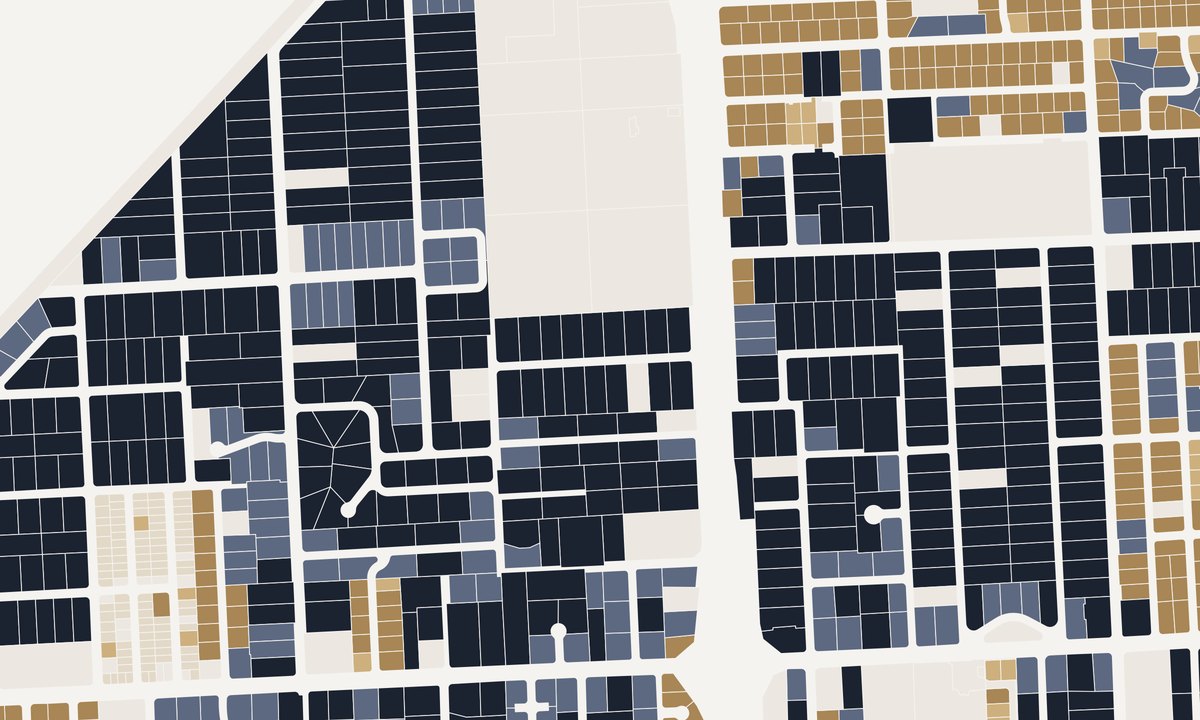
Under 10,000 SF10,000 to 15,00015,000 to 22,00022,000 to 35,00035,000 SF and upLot sizes from Miami-Dade County property records, October 2026
The most expensive mistake a Glenvar Heights buyer can make is to treat the neighborhood as one market. It is not. Inside its 4.08 square miles are close to two hundred recorded plats, two zip codes that price hundreds of thousands of dollars apart, lots that run from under 5,000 square feet to more than two acres, and a housing stock that ranges from untouched 1950s ranches to eight-figure new construction. The block decides the comp. This is how I read the blocks.
The Lot Is the Headline
The median Glenvar Heights single-family lot is 16,438 square feet, or 0.38 acres, measured across closed single-family sales from April 2025 through March 2026. Most parcels fall between 10,000 square feet and an acre. That is about 60% more land than the Coral Gables median of 10,000 square feet and well above South Miami at 10,080, and it is the reason a buyer who could afford either of those neighborhoods ends up here. Pinecrest, at a 24,534-square-foot median, is the only neighbor with more.
Price per square foot was $743 in Q2 2026, up 11.4% year over year, against 2.2 months of supply, the tightest of the eight neighborhoods I track. Price per square foot does not separate the land from the structure or prove appreciation on its own, so read it alongside the rest. What is countable is the building: six of the quarter's 27 closings were new construction, topping out at $5,553,146.
Two Zip Codes, Two Markets
Glenvar Heights sits in two zip codes: roughly from Bird Road down to Miller Drive is 33155, and the rest is 33143. The two sides price apart, and the table below shows by how much. Read it as a prompt to ask which side of the neighborhood you are shopping, not as a description of who is buying here: each figure covers a whole zip code, and neither zip code stops at the neighborhood line.
| Zone | Zip | Median sale price | Median days on market | Zip-level pattern |
|---|---|---|---|---|
| South | 33143 | $1,850,000 | 58 | The higher-priced side, and the larger share of the quarter's resale volume at 69 sales. |
| North | 33155 | $1,119,000 | 30 | Lower price points and shorter time on market, on 13 sales. |
Source: SE Florida MLS via Compass, closed single-family sales within each full zip code, Q2 2026. Unlike the neighborhood figures elsewhere on this site, these are not classified by mapped location. Analysis by Jorge Guanche, Compass, Miami.
Read that table with the caveat it needs. Neither zip code stops at the Glenvar Heights line. 33143 reaches east into South Miami and the unincorporated pockets near Coral Gables, and 33155 covers a large piece of Westchester to the north, so a good part of the $730,000 spread is geography that has nothing to do with this neighborhood. Treat it as a reason to ask which side of the neighborhood you are shopping, and then stop using zip-level data, because which comps apply to a house depends on its block and its condition. I pull the address-level comps with clients before we tour.
The Named Pockets
Glenvar Heights was never a master-planned community. It grew from plats recorded over several decades, and the county plat layer shows close to two hundred of them substantially inside the CDP, most of them small. A handful still carry their own market identity in the MLS, and those are the names you will see in listings.
Each of these is a recorded plat, with a plat book and page in the county record. Sudlow Park (PB 39-62) and Beverly Gardens (PB 57-3) are mid-century pockets with the 1950s-to-1970s ranch architecture that defines most of the neighborhood, and both put up small clusters of listings regularly. Bridgepoint (PB 125-30) sits nearby with a similar character. Sunset Grove (PB 38-4 and 50-22) and Camner Estates (PB 58-21 and 62-67) are quieter and well established; Sunset Grove usually has several homes on the market at any time, and Camner Estates is a smaller pocket known for its mature landscaping and settled streetscape. Estonia (PB 45-64 and 59-31) trades as its own micro-area in the MLS.
Palm Miami (PB 28-53 and 31-35) is the premium tier, a small upper-end pocket where listings have reached the $5 million range. Palm Miami Heights, PB 43-37, is a separate plat that sits outside the CDP, so check which one a listing means. Ludlam Point (PB 126-53 and 129-84) and Ludlam Gardens (PB 78-60) sit near the northern end of the Ludlam Road corridor, SW 67th Avenue. Both are recorded inside the CDP, and both run as mixed residential and light-commercial blocks rather than pure residential streets.
What the Houses Are
The primary stock is single-story ranches and cottages built between the 1950s and 1970s: concrete block, terrazzo or tile floors, big screened patios, mature trees front and back, driveways sized for a boat. For an older house, assess the actual roof, structural condition, permits and improvements rather than treating the construction era as a guarantee of quality. The condition range is wide. On the same street you can find an original ranch that has not been touched in decades, a renovated and expanded one, and a brand-new custom build where a ranch used to be.
| Tier | Price range | What you are buying |
|---|---|---|
| Entry-level | Under $1M | Smaller lot, original condition, significant renovation likely. Increasingly rare; the cheapest active listing asked $1,100,000 as of July 5, 2026. |
| Mid-range | $1.2M to $3M | Half-acre lots, renovated or updated, 2,000 to 4,000 square feet. Most of the activity is here. |
| Upper tier | $3M to $8M | New construction on large lots, modern builds, custom finishes. |
| Estate | $8M and up | New luxury construction on oversized lots; eight-figure custom homes are starting to appear. |
Source: closed single-family sales and active listings, Q2 2026, classified by mapped location, MLS via Compass. Analysis by Jorge Guanche, Compass, Miami.
Condition is the single biggest variable inside those tiers. On the deals I have worked here, original midcentury ranches have traded around $450 to $550 per square foot and new construction around $700 to $900 and above. Treat those as planning ranges from my own files rather than a published statistic. A 2,500-square-foot original ranch and a 2,500-square-foot new build on adjacent lots can close 50% apart, which is why a neighborhood median only takes you so far here and why I price off the block.
HOA Status and Property Restrictions
Glenvar Heights is unincorporated, so county requirements apply and there is no municipal millage on top of the county rate. That does not establish whether an individual property has an HOA, recorded covenants or other private restrictions. Most of the neighborhood has no mandatory homeowners association, and recorded covenants do exist on some platted areas, so review the title documents, the recorded restrictions, the zoning and the permit history for the specific property before you plan anything.
The reason there is no city hall is older than any of this. The City of South Miami's own history records that the Town of South Miami incorporated about six square miles in March 1926, bounded by Red Road on the east, SW 104th Street and Kendall Drive on the south, Ludlam and the Palmetto on the west, and Bird Road on the north. The city was cut to just over three square miles in 1933 and reduced again in 1937 when, in the city's words, dissatisfied northern residents sued out of the city. The irregular boundary lines and the absence of a city government here date to that split. None of it says anything about what is recorded against an individual parcel.
Where it matters day to day is renovation. Clients who buy in Coral Gables can spend months in front of the Board of Architects over a roof color or a fence. Here you work with the Miami-Dade County permitting office rather than a municipal board of architects. That changes which office reviews the plans. It does not establish how long any particular permit will take, so build the review into your schedule and pull the permit history before you commit to a plan; the renovation and development feasibility calculators pull the lot, the zoning and the existing living area for any address from the county record so you can run both paths.
Who Is Buying the Lots
After years of working transactions on these streets, I see three buyer profiles. Move-up buyers coming from condos or smaller homes in Kendall and Westchester who want a real yard and school access. Professionals relocating to Miami, often from the Northeast or California, who want a central location with expressway access and are drawn to the lot sizes without the Coral Gables or Pinecrest premium. And investors and developers who underwrite on the land and buy older homes to renovate or replace. That is what I see across my own transactions. It is an agent's read of the deal flow, not a measured buyer survey.
How to Read a Block
Start with the plat and the covenants, because they decide what you can build. Then the lot, because it decides what the house is worth. Then the side of the neighborhood, because it decides who else is bidding. Only then the house, and only against comps from the same blocks in the same condition. If you want that done for a specific address, call me and I will pull it before we tour. The wider picture, from schools to taxes to what closed last quarter, is in my guide to living in Glenvar Heights, and the comparison with Pinecrest and Coral Gables puts the lot sizes side by side with the neighbors'.
Sources
SE Florida MLS via Compass, Closed single-family sales, Q2 2026, classified by mapped location; zip-code medians by full zip boundary; median lot size from closed single-family sales, Apr 2025 - Mar 2026
Jorge Guanche, Q2 2026 Southwest Miami-Dade Market Report
City of South Miami, History of South Miami (1926 incorporation, 1933 and 1937 boundary reductions)
Miami-Dade County, Land Information GIS, recorded subdivisions layer, queried September 19, 2026
U.S. Census Bureau, Glenvar Heights CDP land area, 2020