The UM Effect: How the University of Miami Shapes Real Estate Values in Coral Gables, South Miami & Glenvar Heights
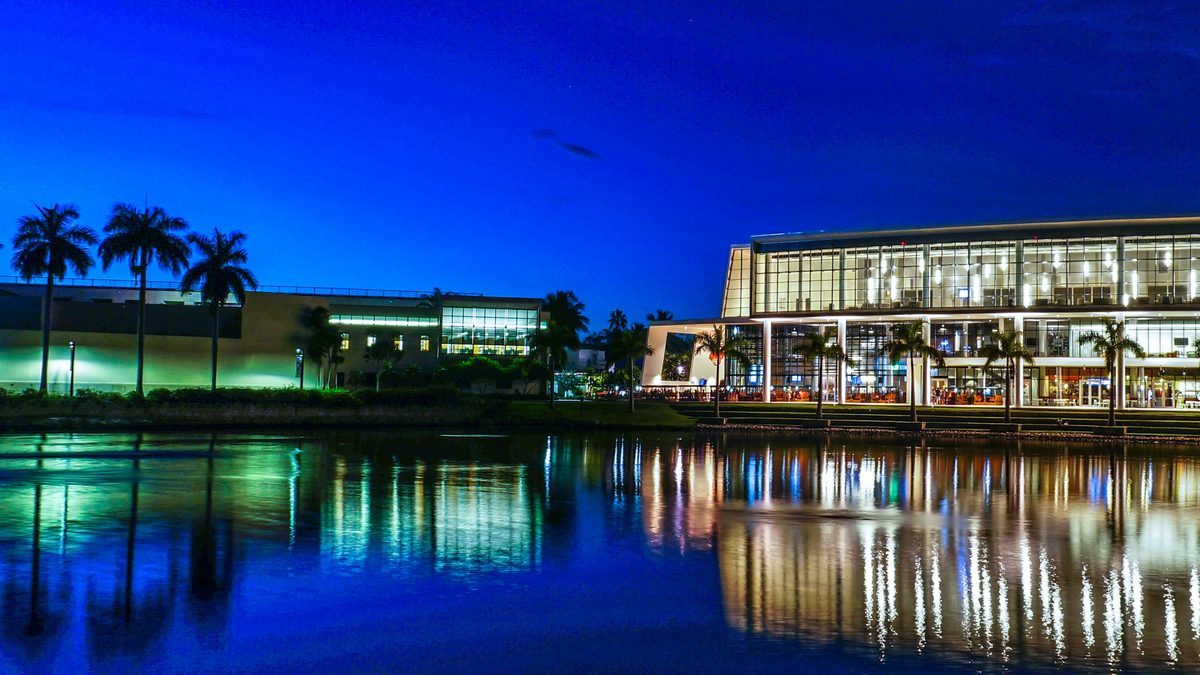
Buyers walking into Coral Gables, South Miami, or Glenvar Heights tend to weigh the same things first: school ratings, commute times, lot size, flood zone. Fewer of them factor in the 239-acre research university sitting in the middle of the corridor. My own history with that campus runs deep. I grew up a few blocks from it, my mother worked at the University of Miami for more than 20 years, and I earned my own degree there. So when I tell you the campus shapes this market, it comes from watching the neighborhood from the inside for most of my life.
The University of Miami is the largest private employer in the three neighborhoods I cover most, and its students, faculty, staff, and patients move through the local housing market every year. After two decades working these blocks, I can tell you the campus is one of the steadiest demand drivers in Southwest Miami-Dade. It does not show up as a line item on any listing, but it sits underneath the prices.
I will flag where the data is solid and where it is dated, because some of the figures that get repeated about UM are more than a decade old.
Quick Reference: The UM Effect at a Glance
Enrollment: 20,104 total students as of Fall 2025, with 13,241 undergraduates and 6,863 graduate students, according to the University of Miami Office of Institutional Research and Strategic Analytics.
Applications: UM received a record 58,139 applications for the Class of 2029 and admitted about 18%, according to the university's published Class of 2029 profile.
Employment: UM and its UHealth system employ more than 10,000 full- and part-time faculty and staff, according to the university.
The research finding: Home prices and rents are highest in ZIP codes anchored by a medium-sized university of 10,000 to 20,000 students, according to a 2019 Journal of Big Data study of approximately 2.7 million homes. UM sits just above that band at 20,104 students.
Campus construction: Centennial Village Phase 2 adds 1,145 beds and its opening was reported by the university on September 3, 2026; Gables Village would replace Mahoney-Pearson's 1,426 beds with 1,458 beds, on an announced summer 2026 construction start.
Local single-family medians (MLS, Apr 2025 - Mar 2026): Coral Gables $2,000,000, Glenvar Heights $1,650,000, South Miami $1,166,250.
More Than a University
The University of Miami is an economic engine well beyond its role as a school. The most recent published study of its economic footprint, conducted for fiscal year 2011, put UM's direct, indirect, and induced impact at $3.15 billion for Miami-Dade County and supported 27,561 jobs in the county, according to that University of Miami study. A companion figure topped $5.6 billion across the tri-county region. Those numbers are now more than a decade old, and I cite them as the most recent I could find published by the university rather than as current figures. The university has grown since: enrollment is up, the campus has added beds and buildings, and the UHealth system has expanded into new facilities. The 2011 study almost certainly understates where things stand today.
What matters for real estate is the shape of the thing more than the exact dollar figure. A research university of this size produces a population that needs housing, spends locally, and does not pack up and leave when the broader economy softens. That last point is the one I come back to most with clients. Enrollment at selective universities has tended to hold steady or rise during recessions. That is a reason the renter and buyer pool here is broad. It does not establish a guaranteed resale premium, rent level or investment return for any particular property; compare the property's actual alternatives, carrying costs and condition.
What the Research Says About University Proximity
The clearest academic work on this question comes from a 2019 study published in the Journal of Big Data by Rivas and colleagues, which analyzed roughly 2.7 million homes across 13,105 ZIP codes over 21 years. The headline finding is specific and useful: average home prices and rents were highest in ZIP codes anchored by a medium-sized university of 10,000 to 20,000 students, according to that study. The University of Miami sits at 20,104 students. By the study's own cutoff that puts it in the large-university tier rather than the medium band the finding describes, so I do not apply the medium-university finding as the one that describes this market.
The study found the strongest proximity effect on two-bedroom home prices and one-bedroom rents, which lines up with the kind of housing students, young faculty, and hospital staff actually rent and buy. It also flagged something honest that I pass along to investors: prices near universities rise faster and fall faster. The proximity premium is real, but it adds volatility, which favors long-term holders over short-term flippers.
A separate set of figures comes from RealPage student-housing analytics, not the academic study, so I keep them in their own bucket. RealPage reported that purpose-built student housing within a half mile of campus pre-leased at 61.9%, versus 52.9% for properties more than a mile out (RealPage Analytics, March 2020 pre-lease data), and that the closest properties commanded an average of $837 per bed against $668 farther out, a premium of about $169 (RealPage Analytics, May 2022 rent-by-distance data). Those figures describe the dedicated student-housing market nationally rather than single-family resale in the Gables, so I treat them as a directional signal instead of a number to apply to a specific home here.
Both sources point the same way. Proximity to a university of UM's size and selectivity supports rents and prices, and the effect concentrates on smaller units close in.
Where the Value Lands: Three Neighborhoods
This is the part where my own market data matters more than any national study. The numbers below come from closed single-family sales reassigned to their true neighborhood boundaries rather than the raw MLS labels, which listing agents mislabel constantly. All figures are MLS closed sales over the trailing twelve months, Apr 2025 - Mar 2026.
Coral Gables. The campus sits inside city limits, so the Gables carries UM more directly than anywhere else I cover. Single-family homes closed at a $2,000,000 median across 459 sales, up 4.6% year over year at a 50-day median to contract, according to MLS data (Apr 2025 - Mar 2026). The Gables is where the most expensive Miami real estate concentrates: in August 2025, Bloomberg named Gables Estates, a guard-gated neighborhood within Coral Gables, the most expensive neighborhood in America at a typical home value around $21.2 million, with seven of the country's ten priciest neighborhoods located in Florida, according to Bloomberg. That headline describes one waterfront pocket rather than the city as a whole, but it captures the gravity at the top of this market. Underneath the trophy tier, what holds Gables value is municipal architectural control, top-rated public schools, and the campus anchoring the corridor's economy.
South Miami. A 2.3-square-mile city pressed directly against the UM campus, South Miami is where I see the clearest faculty-and-staff demand. Single-family homes closed at a $1,166,250 median across 108 sales, down 5.6% year over year at a 49-day median to contract, according to MLS data (Apr 2025 - Mar 2026). My office is on Sunset Drive, so this is my daily beat, and the buyer pool here skews toward UM faculty, South Miami Hospital staff, and working professionals who want a single-family home inside a walkable core. The campus and the hospital are each five minutes out, and the South Miami Metrorail station gives this market transit access most of Southwest Miami-Dade does not have. The recent price softening reflects a broader cooling rather than any weakening of the demand drivers.
Glenvar Heights. Unincorporated and just west of South Miami, Glenvar Heights benefits from UM's amenity halo without sitting on top of campus density. Single-family homes closed at a $1,650,000 median, according to MLS data (Apr 2025 - Mar 2026). One note on methodology: the April 2025 to March 2026 Glenvar series used here excludes Pine Rockland Estates, a concentrated new-construction subdivision, so that resale median stays comparable across pulls. My Q2 2026 report includes new construction and says so. Glenvar's signature is land. The median single-family lot runs about 16,800 square feet, or 0.39 acres, based on 649 closed sales tracked through Compass between 2020 and 2026, which is roughly 60% more land than South Miami or Coral Gables deliver at the same price tier. Glenvar buyers are paying for proximity to campus and to top schools while getting acreage the incorporated cities cannot match.
Housing Demand From Students, Faculty, and Staff
UM drew a record 58,139 applications for the Class of 2029 and admitted about 18%, according to the university's published profile. The competition for a seat tells you the university is not shrinking, and a growing, selective student body needs somewhere to live. The university houses a large share of undergraduates on campus, but graduate students, upperclassmen who move off campus, and the more than 10,000 faculty and staff UM and UHealth employ all draw on the surrounding rental and purchase market.
That demand sits on housing the university does not supply. Faculty buying their first Miami home, residents and fellows renting near the medical campus, and staff who want a short commute all compete for the same single-family and small-multifamily stock that families and investors want. It is a layered demand source that non-university neighborhoods simply do not have.
On-campus rates give a sense of the spending power in play. University of Miami residence hall costs for a standard double have run in the low-to-mid teens per academic year in recent rate schedules, with newer Centennial Village beds at the higher end of campus pricing, according to University of Miami Housing and Residential Life. A family paying that for a dorm room is part of a population with real housing budgets, and a meaningful share of it lands off campus.
What UM Is Building Right Now
Universities do not commit hundreds of millions of dollars to a campus unless they see a long future in the location. UM's current construction pipeline is a direct signal of institutional confidence, and it has real spillover into the local construction economy and housing demand.
The timing matters too. UM's national profile has been climbing on two fronts at once. The investment wave below sits alongside a football resurgence I have followed my whole life, from the dominant Hurricanes teams of the 1980s through the early 2000s to the 2025 squad that went 13-3 and reached the College Football Playoff National Championship game, beating Texas A&M, Ohio State, and Ole Miss in the playoff before losing the title game to Indiana at Hard Rock Stadium. That run was the program's best in over two decades. Applications, visibility, and donor energy tend to follow that kind of season, and a university with rising appeal is a stronger long-term anchor for the homes around it.
Centennial Village. Phase 1 opened in August 2024. Phase 2 adds 1,145 beds across three more residential towers, bringing the complex to roughly 2,025 first-year beds, according to University of Miami News and the Miami Hurricane. It was scheduled for an August 2026 opening when this article was written, and the university's September 3, 2026 UMTV report covered the opening of Phase 2. That confirms the opening was reported; it does not establish the precise opening day or how many beds are occupied.
Gables Village. This project would replace the dated Mahoney-Pearson Residential College, which holds about 1,426 beds, with a 1,458-bed complex across 429 units in two towers. As published by University of Miami News and the Miami Hurricane, construction was planned to begin in summer 2026 with completion targeted for Fall 2028. That is the announced schedule rather than a verified construction status, so check the university for current milestones.
Academic and research facilities. The Frost Institute for Chemistry and Molecular Science, a 94,000-square-foot research building funded by a $100 million gift from Phillip and Patricia Frost, opened in Fall 2022 and is fully operational, according to University of Miami News. The Knight Center for Music Innovation, a 25,000-square-foot, $36.5 million facility with a 200-seat recital hall, is complete and open, according to University of Miami News. At the Miller School of Medicine, Project Ignite consolidates 17 teaching facilities into a single medical-education hub.
UHealth at SoLe Mia. UM's health system opened a seven-story, 363,000-square-foot ambulatory center in North Miami in the fall of 2025, the largest outpatient facility in the UHealth network, according to a UHealth announcement. The center sits inside the larger SoLe Mia master-planned community in North Miami, so it is geographically separate from the Coral Gables campus, but it reflects the same institutional growth trajectory that anchors the corridor.
Adding the confirmed costs on the academic side alone, the Frost Institute and Knight Center represent well over $130 million, before the housing towers and medical projects. The full pipeline runs into the hundreds of millions. Construction at that scale means jobs, material demand, and a clear institutional bet on staying put.
The Amenity Halo
Beyond the demand and the dollars, UM makes the surrounding neighborhoods better places to live, which is its own value driver. Tens of thousands of students and employees move through campus daily, and that volume supports the restaurants, retail, and services clustered along the US-1 and Sunset Drive corridors. The Frost School of Music puts on performances. The university hosts theater, lectures, and exhibitions open to the public. Campus pedestrian infrastructure connects to the surrounding streets, which lifts walkability in an area that is otherwise car-dependent.
For a homeowner, this halo is the difference between a quiet residential pocket and a residential pocket with a cultural and commercial engine next door. It is part of why South Miami and Coral Gables sustain the walkability premiums they do.
The Investor Angle
If you are buying near UM as an investment, the case rests on a broad and fairly stable renter base. Enrollment at selective universities has held through past downturns, the faculty and staff base is large, and the medical campus generates its own renter pool of residents and fellows. None of that makes a property recession-proof. The research points investors toward smaller units, since the strongest proximity premium showed up on two-bedroom homes and one-bedroom rentals.
Prices near universities rise faster and fall faster, and that volatility caveat from the 2019 study is the part I make sure investors hear. I would not underwrite a UM-proximity deal on a 12-month flip timeline. A longer hold gives the demand base more time to work, which is a reason to be patient rather than a promise about the outcome.
What This Means for Buyers and Sellers
For buyers, UM is a durable demand driver rather than a floor under prices. The university is not going anywhere and its enrollment and construction trajectory point up, which supports the buyer and renter pool over time. If you are weighing two otherwise similar homes, proximity to campus is a fundamental worth considering, alongside the comps, the condition and the carrying costs on each.
Sellers are on the other side of that, and campus proximity is a marketable feature many listings underuse. Walkability to campus, access to UM cultural offerings, and the broader amenity ecosystem belong in the listing, especially for homes that draw faculty, staff, or graduate-student renters.
If you already own here, your property benefits from UM's output even if you never track it, and understanding why helps you make better calls on renovation timing and when to sell. For the neighborhood-level numbers behind this article, see my Glenvar Heights investment analysis and the Coral Gables vs. Pinecrest comparison, or start with the Coral Gables, South Miami, and Glenvar Heights neighborhood guides. Carrying costs vary by neighborhood too, so the property tax rates by neighborhood and Miami homeowners insurance guides are worth reading alongside this one. If you want to walk through what the campus effect means for a specific block or a specific property, that is the kind of analysis I do before any client tours. Full disclosure on where my loyalty sits: I am a Canes fan through and through, even though both of my kids ended up at FSU.
Sources
University of Miami Office of Institutional Research and Strategic Analytics, Fall 2025 Fact Book (enrollment: 20,104 total, 13,241 undergraduate, 6,863 graduate).
University of Miami Undergraduate Admissions, Class of 2029 profile (58,139 applications, 18% admit rate).
University of Miami, Economic Impact study for fiscal year 2011 ($3.15 billion Miami-Dade impact, 27,561 county jobs, $5.6 billion-plus tri-county).
Rivas, R. et al., "The impact of colleges and hospitals to local real estate markets," Journal of Big Data, 2019 (roughly 2.7 million homes, 13,105 ZIP codes, 21 years; medium-university and two-bedroom findings).
RealPage Analytics, student-housing pre-leasing data (March 2020): 61.9% vs 52.9% pre-lease within a half mile vs over a mile. RealPage Analytics, rent-by-distance data (May 2022): $837 vs $668 per bed.
Bloomberg, August 2025 (Gables Estates named most expensive U.S. neighborhood, around $21.2 million typical value per Zillow Home Value Index for the 12 months through July 2025; seven of top ten in Florida).
University of Miami News and The Miami Hurricane, 2024-2025 (Centennial Village Phase 2, Gables Village, Frost Institute, Knight Center, Project Ignite).
UHealth / University of Miami Miller School of Medicine, 2025 (UHealth at SoLe Mia opening, 363,000 sq ft, seven stories).
MLS closed single-family sales, trailing twelve months Apr 2025 - Mar 2026, polygon-reassigned per neighborhood (Coral Gables, South Miami, Glenvar Heights medians).